
TL;DR: The State of Recruiter Skills in 2026
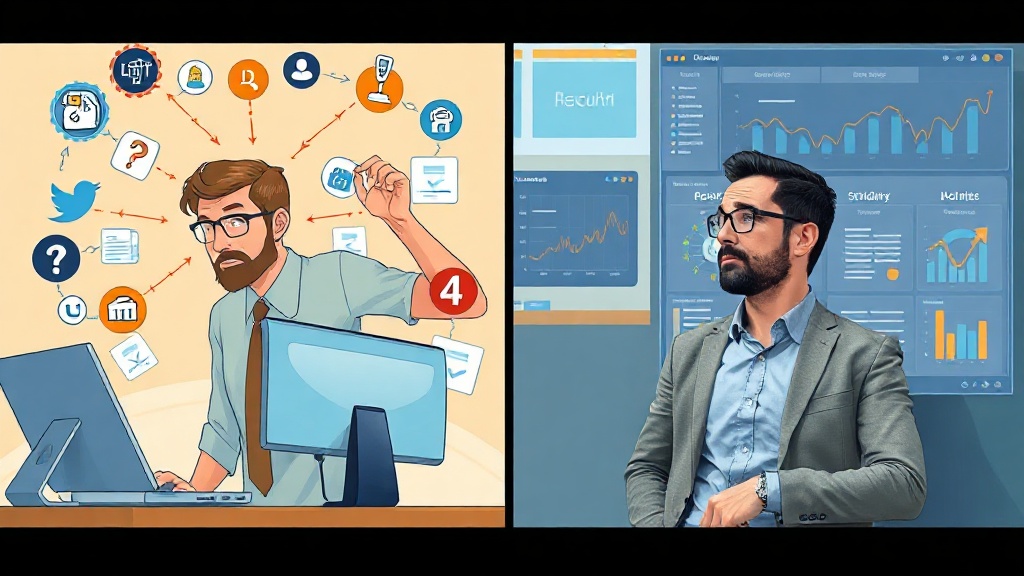
- 47% of recruiters describe their experience as reactive and overloaded, with more than half spending the majority of their time on non-strategic administrative work rather than the human craft that brought them into recruiting (Aptitude Research / Greenhouse, 2026).
- Technology is not replacing recruiters — it’s amplifying the gap between those who embrace it and those who don’t. A divide is opening between recruiters who operate as strategic consultants and capable executors who risk being left behind (Greenhouse Open for Ops panel, July 2026).
- AI literacy has become a distinct recruiter competency. The best recruiters don’t just use AI tools — they understand when those tools are wrong, recognize bias amplification risks, and maintain the human judgment that 91% of candidates demand transparency about.
- The geographic reality of hiring has fractured across fifty distinct markets. Recruiter skills that work in Sioux Falls (Lever Pressure Score: 82.1) differ sharply from those needed in San Jose (17.5), and smart technology platforms are the bridge that makes this adaptation possible.
- This article maps each traditional recruiter skill to its technology-augmented counterpart, providing a concrete framework for building your augmented recruiter skill stack.
The Recruiting Landscape Has Rewired Itself
The spread between America’s most competitive and least competitive hiring markets hit a near-fivefold gap in 2026, and recruiter skills that delivered results three years ago are being stress-tested by conditions that vary dramatically by state, sector, and candidate expectations.
According to Lever’s 2026 Recruiter Pressure Index, built on Bureau of Labor Statistics JOLTS and LAUS data, South Dakota scored 82.1 on the Pressure Index while California registered just 17.5 (Lever, June 2026). Fourteen states scored “High Pressure” (60+), twenty-seven landed in the “Medium” range (35-59), and ten ranked “Low” (under 35). The geographic center of difficult hiring has shifted from coastal tech corridors to the Great Plains, Mountain West, and Deep South.
Federal Reserve Chair Jerome Powell described the broader U.S. economy as a “low-hire, low-fire” environment, with national job openings drifting down to 6.5 million in December 2025 (BLS JOLTS). Yet the Washington-Arlington-Alexandria metro area lost approximately 14,100 federal jobs between January and May 2025, and non-government layoffs across the region surged 139% year over year compared to just 4.6% nationally (Richmond Fed, Brookings Institution).
What this means for recruiter skills: The recruiter who can read market data, adapt sourcing strategies to local conditions, and deploy technology to operate efficiently across fragmented markets holds a structural advantage that no amount of generic “communication skills” can match.
The Traditional Recruiter Skill Set (And Why It’s No Longer Enough)
More than half of recruiters spend at least half their working time on non-strategic administrative tasks, according to Aptitude Research’s 2026 “State of the Recruiter Experience” report. For a profession built around human connection, this statistic represents an existential problem — the classic recruiter skills framework of communication, active listening, and relationship building is being buried under an administrative layer that technology was supposed to eliminate (Aptitude Research / Greenhouse, 2026).
Kelsey Biggs, Global Talent Acquisition at Gong, captured the frustration during Greenhouse’s Open for Ops panel: “Her recruiters, she said, do not feel overloaded so much as they feel the work is not meaningful: constantly leaving the ATS, bouncing between disconnected tools, doing the administrative motion instead of the human one. That is where the frustration lives” (Greenhouse Open for Ops, July 2026).
The integration data confirms Biggs’s diagnosis: 61% of recruiters cite poor tool integration as their biggest technology frustration, and 57% leave their ATS just to complete sourcing tasks (Aptitude Research / Greenhouse, 2026). No technology replaces the human capacity to read a candidate’s hesitation in a five-second pause or to craft an outreach message that lands with genuine empathy. The gap that defines recruiter skills in 2026 is not between good recruiters and bad recruiters — it’s between those who have reclaimed their time for strategic human work and those who remain trapped in tool-switching administrative motion.
Technology as an Amplifier, Not a Replacement
63% of job seekers say they are comfortable with AI in the hiring process, particularly when it makes hiring feel faster and less frustrating — but 91% say transparency about AI use is at least somewhat important to them (Employ Job Seeker Nation Report, 2026). The data points toward augmentation, not automation, as the winning strategy.
Deloitte’s 2025 Global Human Capital Trends report frames the core organizational tension as “automation or augmentation,” arguing that AI should make work more human, not replace humans (Deloitte Insights, 2025). The consensus among TA leaders at Greenhouse’s 2026 Open for Ops panel was unanimous: “Speed without verification is the risk. Structured, defensible, human-in-the-loop hiring is the goal.”
Joey Quaranti, Talent Strategy & Operations at Carta, gave the human mandate clear shape: “The most important value a recruiter brings is their ability to connect with people. As we introduce all these AI capabilities, we want to make sure the candidate still feels like there’s a person taking care of them” (Greenhouse Open for Ops, July 2026).
How recruiters are using AI today: According to Employ’s 2025 Recruiter Nation Report, recruiters concentrate AI on administrative and communication tasks — 41% use it for job description recommendations, 41% for communicating with candidates, and 39% for recruitment marketing content. High-stakes strategic decisions remain firmly in human hands (Employ Inc., 2025).

AI Literacy: The Recruiter Skills Nobody Talks About
41% of recruiters already use AI for job descriptions and candidate communications, but the skill that separates thriving recruiters from stagnant ones isn’t tool adoption — it’s knowing when the tool is wrong. Dom Prieto, Talent Acquisition Operations at Asana, captured the standard: “If the only thing that you’re anchoring on is speed, you’re doing yourself a disservice. To trust the AI that we implement, I need my team to feel comfortable understanding when it’s wrong” (Greenhouse Open for Ops, July 2026).
AI literacy for recruiters breaks down into four concrete sub-skills:
1. AI Output Verification
An AI-generated candidate summary, a ranked shortlist, a suggested outreach message — each is a starting point, not a deliverable. The recruiter who treats AI output as a first draft to be interrogated is practicing one of the most valuable recruiter skills of 2026. The recruiter who accepts it as finished work amplifies bias, misses context, and erodes candidate trust.
2. Bias Amplification Awareness
AI models trained on historical hiring data can magnify existing patterns of bias rather than correcting them. A tool’s “confidence score” is not a truth claim — it’s a statistical output shaped by its training data. This awareness is not a data science skill. It is a recruiting ethics skill.
3. Prompt Engineering for Talent Matching
The difference between “find me Python developers” and “surface candidates with 3+ years of Python in production at B2B SaaS companies with demonstrated experience scaling systems past 100K users” is the difference between noise and signal. Translating recruiting intent into precise AI queries has quietly become one of the most practical recruiter skills for daily workflow.
4. Tool Evaluation vs. Process Diagnosis
Recruiting operations has “quietly become the AI strategy owner, the build-versus-buy decision maker, and increasingly the true owner of the recruiter experience itself,” according to Kelsey Biggs at Gong (Greenhouse Open for Ops, 2026). For individual recruiters, distinguishing a tool problem from a process problem — knowing whether the bottleneck is bad software or bad workflow — directly determines whether technology investments pay off.
The Data-Driven Recruiter
National hiring averages mask a fivefold spread between the most and least competitive U.S. hiring markets, and the “gut feel” recruiter whose intuition was calibrated to a single market three years ago is operating on outdated assumptions. The hiring conditions that produced that intuition are changing faster than intuition can update (Lever 2026 Recruiter Pressure Index).
The foundational data skills for recruiters in 2026 include:
Pipeline analytics. Understanding where candidates drop off, which sources produce quality hires versus volume applications, and how time-to-fill trends correlate with offer acceptance rates. This is not advanced analytics — it’s the recruiting equivalent of reading a profit and loss statement.
Market intelligence. A recruiter hiring in Sioux Falls needs different sourcing, compensation, and outreach strategies than one hiring in San Jose. Data-driven recruiters use market-level intelligence to calibrate their approach rather than applying a one-size-fits-all playbook.
Quality-of-hire measurement. The most important recruiting metric is also the hardest to measure. Data-driven recruiters work with hiring managers to define quality-of-hire signals upfront — performance ratings at 6 and 12 months, ramp time to full productivity, retention at 18 months — and track them systematically.
The 2026 recruiter does not need to be a data scientist, but must be data-literate: comfortable interpreting dashboards, skeptical of averages, and capable of connecting recruiting metrics to business outcomes in stakeholder conversations.
Soft Skills That Technology Cannot Replace
Ask anyone why they got into recruiting and you’ll hear about people — about the match, about the moment a candidate lands somewhere they belong — not about scheduling interviews (Aptitude Research / Greenhouse, 2026). Technology amplifies these human skills. It does not substitute for them.
Candidate empathy at scale. A recruiter who can make every candidate feel like the only candidate, even when managing a pipeline of 40 active requisitions, practices a skill that no chatbot replicates. This is the specific ability to personalize engagement at volume without burning out.
Cross-functional translation. Dom Prieto’s “sandwich model” from the Asana TA team positions recruiting between three stakeholder groups with competing priorities: leadership (strategy), hiring managers (speed and quality), and candidates (transparency). “Being good at your job is not enough when legal, marketing and sales all have different priorities,” Prieto noted (Greenhouse Open for Ops, 2026). Translating between these constituencies — ROI for leadership, pipeline metrics for hiring managers, honest timelines for candidates — is a diplomatic function no current AI can approximate.
Ethical judgment under pressure. When a hiring manager demands a shortcut that compromises fairness, when pressure to fill a role collides with the need for a diverse slate, when an AI tool surfaces a candidate whose fit warrants deeper scrutiny — these moments cannot be automated. They define the difference between a transactional recruiter and a trusted talent advisor.
Human signal reading. The five-second hesitation. The answer that is technically correct but energetically wrong. The reference call where what isn’t said matters more than what is. These micro-signals require human perception built through experience. No assessment tool captures them. No AI interview analyzer flags them. They remain the recruiter skills that justify the human role in hiring.

How Smart Technology Platforms Restore the Human Core of Recruiting
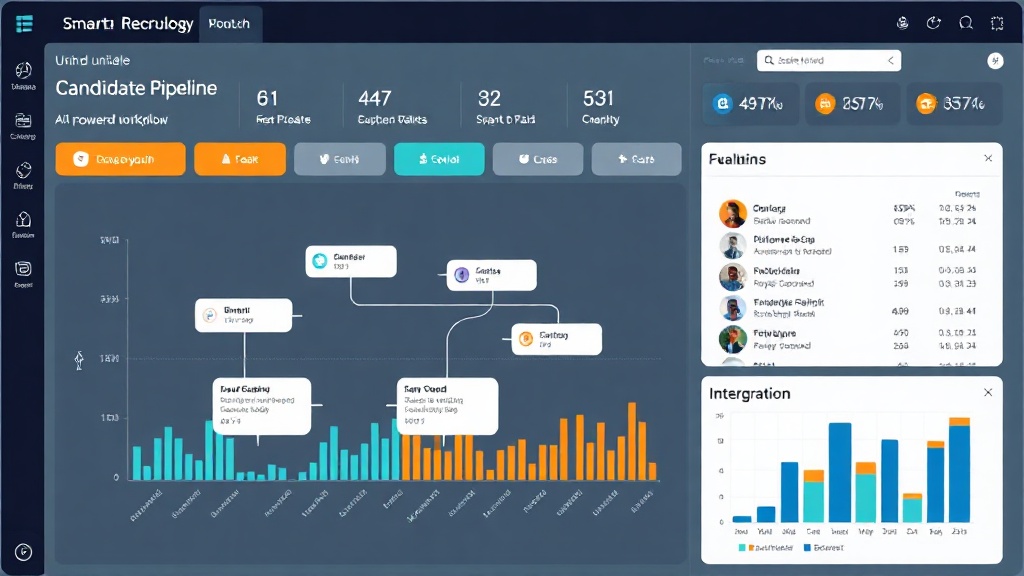
61% of recruiters name poor tool integration as their biggest frustration, and 57% leave their ATS just to complete sourcing tasks — a diagnosis that points to fragmented tools, not deficient recruiter skills, as the root problem (Aptitude Research / Greenhouse, 2026). The solution is not another disconnected point solution. It’s an integrated platform that eliminates administrative motion so recruiters return to the human work that attracted them to the profession.
The capabilities that separate integrated smart technology platforms from the disconnected toolchains frustrating recruiters include:
- Unified workflow. Sourcing, outreach, screening, scheduling, and offer management operate within a single interface, removing the context-switching that consumes recruiter attention and degrades candidate experience.
- AI as an embedded collaborator. AI surfaces structured signal — ranked candidate matches, suggested outreach language, interview question banks — within the recruiter’s existing workflow instead of requiring navigation to a separate tool.
- Market-adaptive intelligence. Platform-level data lets recruiters compare pipeline metrics, time-to-fill, and source effectiveness against market benchmarks, enabling the data-driven decisions that define modern recruiter skills.
- Transparency by design. With 91% of candidates demanding transparency about AI in hiring, platforms that surface AI’s role clearly build the candidate trust that directly affects offer acceptance rates.
The recruiter on an integrated platform practices a different version of the profession: technology handles coordination so the recruiter focuses on connection.

Building Your Augmented Recruiter Skill Stack
Only 47% of recruiters feel their current technology stack enables rather than hinders their work (Aptitude Research / Greenhouse, 2026). The following five-step framework turns the data and frameworks above into an actionable self-assessment any recruiter or TA leader can apply.
Step 1: Audit Your Time Allocation
Track where your time goes for one week. Use the Aptitude Research benchmark: if more than half your hours go to administrative tasks rather than strategic human work, technology integration — not another soft-skills workshop — is your highest-leverage development investment.
Step 2: Assess Your AI Literacy
Rate yourself on the four sub-skills above: AI output verification, bias amplification awareness, prompt engineering, and tool vs. process diagnosis. Most recruiters are stronger on one or two dimensions with clear gaps on the others. Development here is concrete — it means learning to interrogate AI outputs, not taking a general “AI in HR” course.
Step 3: Build Your Data Vocabulary
You do not need SQL. You do need to discuss time-to-fill trends, source effectiveness, pipeline conversion rates, and quality-of-hire signals fluently with hiring managers and finance stakeholders. Pick one metric per quarter, learn to interpret it from your analytics dashboard, and practice connecting it to a business outcome in stakeholder conversations.
Step 4: Protect Your Irreplaceable Human Skills
Candidate empathy, cross-functional translation, ethical judgment, and human signal reading are the skills that administrative overload erodes fastest. Every hour reclaimed through technology integration is an hour invested in the human craft that justifies your role. TA leaders should measure and reward these skills explicitly rather than treating them as soft intangibles.
Step 5: Demand Platform Integration
Recruiters are not IT buyers, but they live with the consequences of technology decisions. If your stack requires leaving the ATS to source, bouncing to a separate tool to schedule, and checking a third system for analytics, the 61% integration frustration statistic is not a complaint — it’s a business case for consolidation.
Frequently Asked Questions About Recruiter Skills
What are the most important recruiter skills in 2026?
The most important recruiter skills in 2026 combine human capabilities with technology fluency. Human-side essentials include candidate empathy, cross-functional translation, and ethical judgment. Technology-side differentiators include AI literacy — verifying AI outputs, recognizing bias amplification, and using prompt engineering for talent matching. Data interpretation, especially the ability to read market-level intelligence and pipeline analytics, rounds out the modern stack.
Are AI and automation replacing recruiter skills?
No — AI and automation are changing which recruiter skills matter most, not replacing them. Technology handles administrative coordination (scheduling, initial screening, drafting job descriptions), freeing recruiters for the human work AI cannot replicate: building candidate relationships, exercising ethical judgment, reading micro-signals in interviews, and translating between stakeholder groups with competing priorities. The TA leader consensus in 2026 is that AI should augment human decision-making, not replace it.
How is AI changing the skills recruiters need?
AI creates demand for four specific new recruiter skills: (1) AI output verification — recognizing when AI-generated summaries or rankings are incorrect; (2) bias amplification awareness — understanding that AI models can magnify existing hiring biases; (3) prompt engineering — translating recruiting intent into precise AI queries; and (4) tool evaluation vs. process diagnosis — distinguishing software problems from workflow problems before buying or blaming technology.
What soft skills do recruiters need beyond technology?
The irreplaceable soft skills include candidate empathy at scale (personalizing engagement across large pipelines without burning out), cross-functional translation (communicating with leadership, hiring managers, and candidates who hold competing priorities), ethical judgment under pressure (maintaining fairness when speed and quality targets conflict), and human signal reading (interpreting micro-cues in interviews and reference calls that no AI tool detects).
How can recruiters develop data-driven decision-making skills?
Build data skills incrementally. Start by mastering one metric per quarter — time-to-fill trends, source effectiveness, pipeline conversion rates, or quality-of-hire signals — using your platform’s analytics dashboard. Practice connecting that metric to a business outcome (revenue impact, retention improvement, hiring manager satisfaction) in stakeholder conversations. The goal is discussing recruiting performance in the language business stakeholders already speak, not becoming a data scientist.
What role does technology integration play in recruiter effectiveness?
Technology integration is the single largest leverage point for recruiter effectiveness in 2026. With 61% of recruiters citing poor tool integration as their top frustration and 57% leaving their ATS for sourcing tasks, disconnected toolchains are the primary barrier preventing recruiters from exercising their most valuable human skills. Integrated platforms eliminate the administrative motion consuming over half of recruiter time and restore capacity for strategic human work.
Sources
1. Aptitude Research / Greenhouse, “The State of the Recruiter Experience” (2026). Greenhouse Blog 2. Employ Inc., “2025 Recruiter Nation Report” and “2026 Job Seeker Nation Report.” Lever Blog — Balancing AI and Authenticity 3. Lever (Employ Inc.), “The 2026 Recruiter Pressure Index: A State-by-State Map of the Talent War” (June 2026). Lever Blog 4. Deloitte Insights, “2025 Global Human Capital Trends.” Deloitte 5. U.S. Bureau of Labor Statistics, JOLTS Data (December 2025). 6. Federal Reserve Bank of Richmond, Regional Economic Data (2025). 7. USDA Economic Research Service, Rural Population Data (2010–2024). 8. Brookings Institution / Metropolitan Washington Council of Governments, DC Metro Labor Analysis (2025).
Empower your recruiting team with smart technology that restores the human core of talent acquisition. [Explore Smart Technology Solutions →]
